Airbnb Expenses to Track: A Checklist of Categories
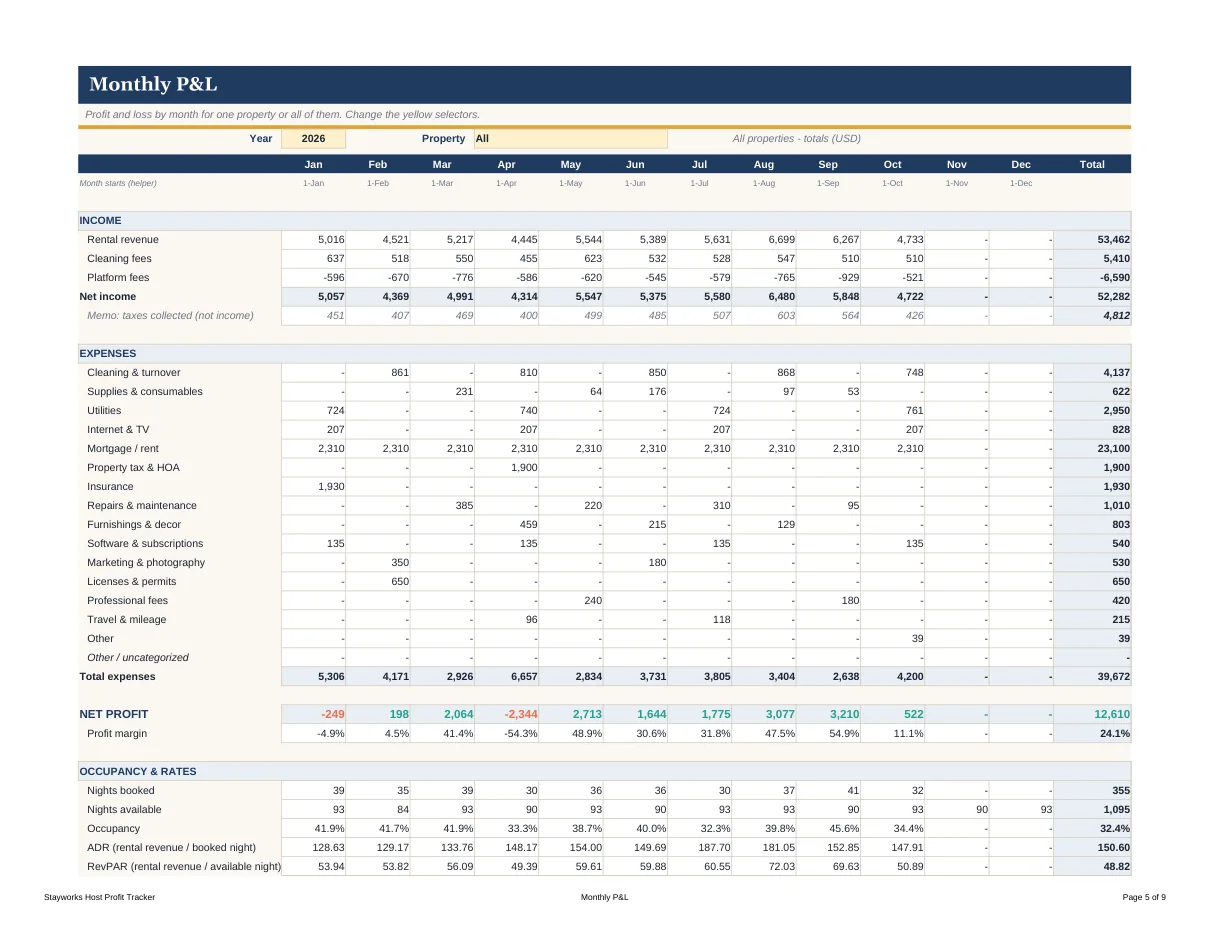
The simplest way to be ready at tax time is to log every cost of running the rental into a fixed set of categories as it happens. This page lists the categories most hosts use. It is a recording checklist, not tax advice: what you can claim depends on where you live and on your situation, so check your local rules or ask a qualified professional.
Why categories matter
A single list of "things I bought" is hard to use. The same list sorted into categories answers real questions: how much did cleaning cost across the year, what did software cost per property, which month had the repairs. It also helps your accountant, if you have one, because the work is already done.
The checklist
Running the stays
- Cleaning and turnover: cleaner invoices, laundry service, your own supplies if you clean yourself.
- Consumables and restocking: toilet paper, soap, coffee, trash bags, light bulbs, batteries.
- Linens and towels: replacements, extras, mattress protectors.
- Utilities: electricity, gas, water, internet, streaming subscriptions provided to guests.
- Platform and payment fees: keep the fee line from each payout.
The property
- Rent or mortgage-related costs: log what applies to you and ask a professional how it is treated.
- Insurance: short-term rental or landlord policies, and any add-ons.
- Property taxes and local permits or licenses.
- Repairs and maintenance: plumber, handyman, HVAC service, pest control.
- Furniture, appliances and decor: larger purchases are often treated differently from small ones, so record the date, item and price.
- Safety equipment: smoke and carbon monoxide detectors, fire extinguisher, first-aid kit, locks.
Running the business
- Software and subscriptions: channel managers, pricing tools, smart lock apps, spreadsheets.
- Marketing: photography, signage, printing, business cards.
- Professional services: accountant, bookkeeper, legal fees, co-host or property manager payments.
- Travel and mileage: trips to the property, supply runs. Keep a mileage log with date, purpose and distance.
- Training and subscriptions: courses, books or memberships related to hosting.
- Bank and card fees.
Guest-facing extras
- Welcome gifts and amenities.
- Printed welcome books, signs and cards.
- Replacement items after damage, and anything you recover from a deposit or claim (record the recovery as income or a reduction, as your accountant advises).
What to record for each expense
For every line, capture:
- Date
- Property (if you have more than one)
- Category (one from a fixed list)
- Vendor
- Amount
- Receipt: a photo or file name, so you can find it later.
Add a note when the purchase is unusual. A year later "bought dehumidifier after the damp in the basement" is far more useful than "hardware store".
Shared costs across properties
If one bill covers several properties (a software subscription, a cleaner who does two units), choose a splitting rule and use it every month: equal split, by nights, or by number of bedrooms. Writing the rule in your log prevents arguments with yourself later.
Habits that make this easy
- Use one card or account only for the rental.
- Photograph receipts the day you buy.
- Review the log on the first of every month and see the totals by category.
- Keep your category list short. Twelve to eighteen categories is plenty; more makes entry slower and totals less useful.
- Keep income and expenses in one place so you can see the monthly result. The guide to what you keep after fees shows how.
A ready-made log
The Stayworks Host Kit includes a Host Profit Tracker (Google Sheets and Excel) with an expenses log that uses a category list you can edit in Settings, plus a monthly profit and loss by property. For receipts, mileage and recurring bills, there is an optional separate organizer sold as an add-on at checkout. The kit is $19.00 one time. Everything is a template for organizing your records: it does not give legal, tax or accounting advice, so check your local rules.
Quick checklist
- Pick a fixed category list.
- Separate rental and personal spending.
- Log date, property, category, vendor, amount and receipt.
- Photograph receipts the same day.
- Ask a qualified professional what applies where you live.