How to Become an Airbnb Host: A First-Month Setup Plan
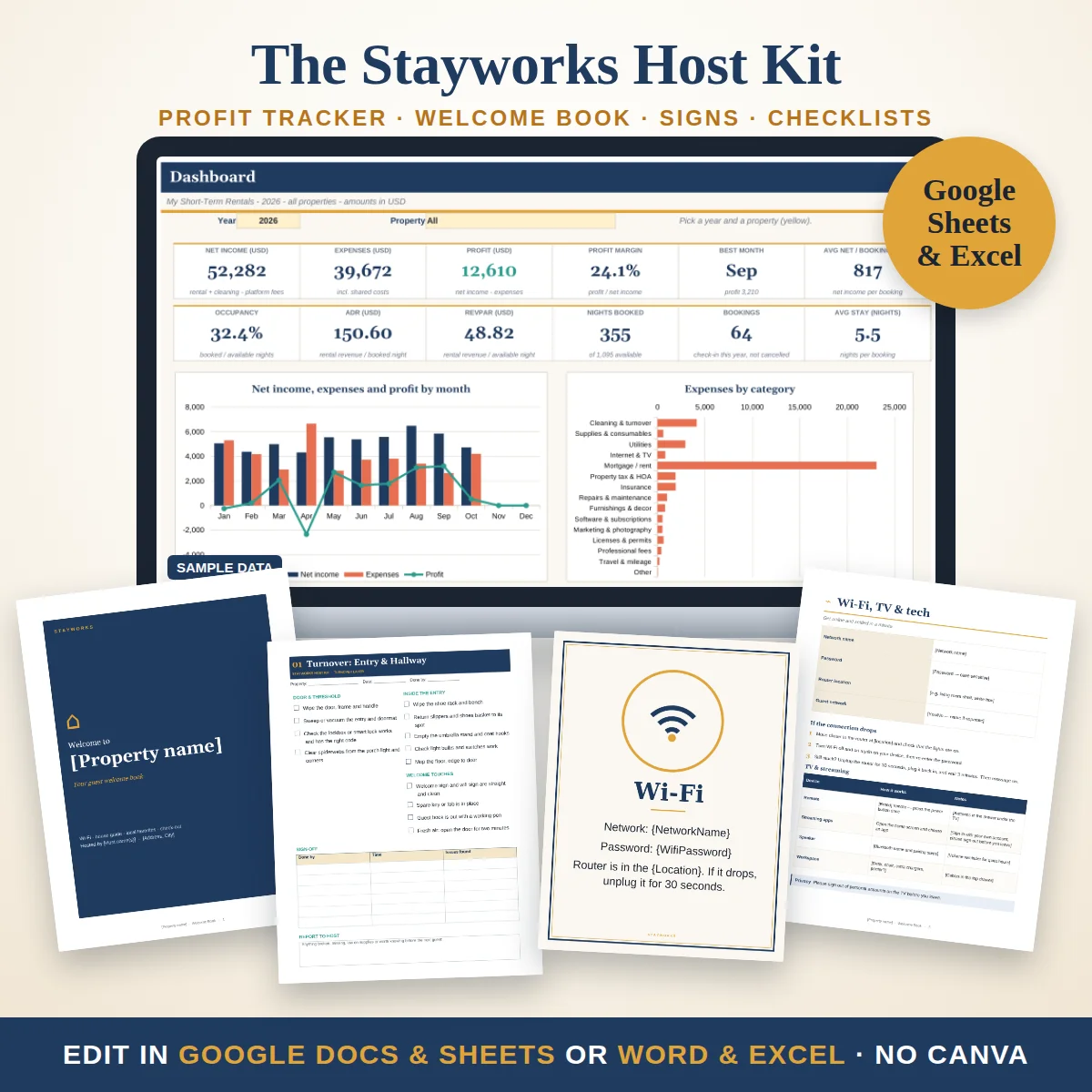
To become a short-term rental host, check what is allowed where you live, set up the guest experience, make turnovers repeatable, and track the numbers from the first booking. This plan spreads that over four weeks and groups the work into three layers: the guest layer, the turnover layer and the numbers layer. It is general information, not legal or tax advice.
Week 1: Check what is allowed
Before you spend on furniture or photos, confirm that you can host.
- Local rules: many cities and regions require a permit, registration or a tax account, and some limit the nights per year or ban short-term rentals in certain areas.
- Your agreements: read your lease, mortgage terms, homeowners association rules and insurance. Landlord or owner permission may be needed.
- Insurance: ask your insurer how short-term guests affect your cover.
- Taxes: ask a qualified professional how rental income is treated where you live.
Write down what you find and the date. These are the facts you will rely on later.
Week 2: The guest layer
This is everything guests see and read.
- Listing basics: accurate photos, a clear description, honest amenities and a house rules section. Describe the space as it is.
- Welcome book: one place with Wi-Fi, check-in, appliances, rules, local tips and check-out. See what to include in a welcome book.
- Signs: a handful in the right places cut repeated questions. The Wi-Fi sign, thermostat note and check-out reminder are good first ones.
- House rules: short and specific. Use the house rules template guide as a starting point.
- Messages: pre-arrival, check-in, mid-stay and check-out.
Week 3: The turnover layer
Guests judge the setup, and the setup depends on what happens between stays.
- Write the turnover checklist room by room, so anyone can do it the same way.
- Stock a supply cupboard: linens (two or three sets per bed), towels, toiletries, cleaning supplies, light bulbs, batteries, trash bags.
- Plan your cleaning: who cleans, how long it takes, when supplies are checked.
- Test it: do one full dry run as if a guest had just left, and time it.
The cleaning and turnover checklist guide goes room by room, and the pre-first-guest checklist helps with the setup tasks.
Week 4: The numbers layer
You cannot improve what you do not measure, and the best time to begin tracking is before the first booking.
- Start a log of bookings: dates, nights, nightly total, cleaning fee, platform fee and payout.
- Start an expense log with fixed categories and a place to keep receipts.
- Set a monthly review: profit per property, occupancy, average nightly rate.
- Keep startup costs separate from running costs so each month is easy to read.
Our guide to what you actually keep after fees shows the arithmetic.
First-month schedule at a glance
| Week | Focus | Output |
|---|---|---|
| 1 | Rules, permits, insurance | A short notes document |
| 2 | Guest layer | Listing, welcome book, signs, messages |
| 3 | Turnover layer | Checklists, supplies, a dry run |
| 4 | Numbers layer | Booking log, expense log, monthly review |
Common beginner mistakes
- Furnishing before checking the rules.
- Writing house rules as a long list of threats. Short and friendly works better.
- No supply buffer. Running out of towels on a busy weekend is avoidable.
- Not tracking the first bookings. Rebuilding the data later is tedious.
- Expecting a specific result. Occupancy and income vary by place and season. Plan with your own numbers.
A shortcut for the setup
The Stayworks Host Kit is built around these three layers. It includes a printable welcome book and a digital welcome guide, 60 printable house signs, 30 turnover checklists, cards and letters, a Host Profit Tracker for Google Sheets and Excel, and a Host Playbook with setup guidance. Everything is editable in Docs, Word, Sheets or Excel. It is $19.00 one time. Templates are for organizing your own work: they are not legal, tax or accounting advice, so check your local rules.
Quick checklist
- Check local rules, agreements and insurance first.
- Build the guest layer: listing, welcome book, signs.
- Build the turnover layer: checklists and supplies.
- Build the numbers layer: logs and a monthly review.
- Do a dry run before the first guest.